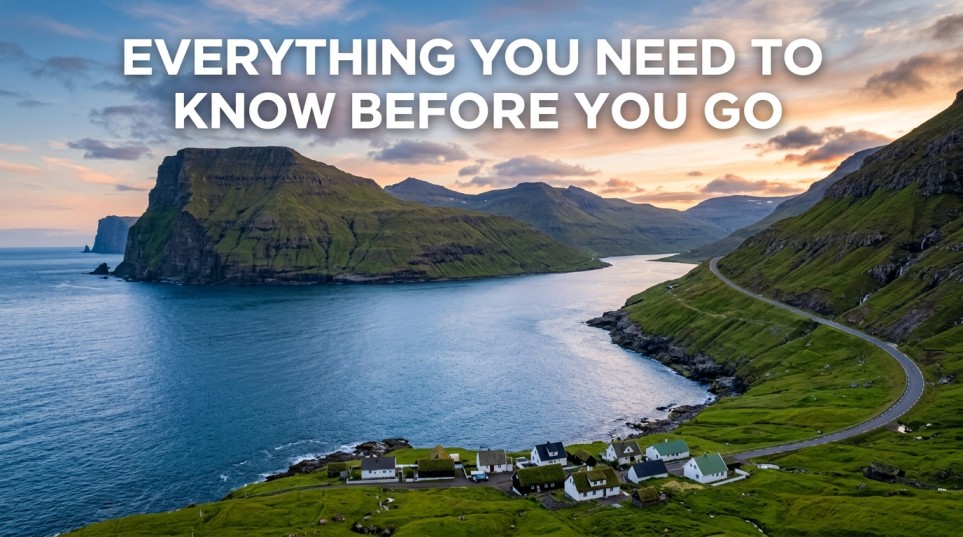

Imagine waking up to green mountains rising directly from the Atlantic, watching waterfalls tumble down cliffs, and driving along narrow roads where sheep casually cross your path. There are no massive resorts competing for attention and no endless rows of souvenir shops. Instead, there are quiet villages, dramatic coastlines, unpredictable weather, and landscapes that seem almost too wild to be real.
Welcome to the Faroe Islands.
Hidden in the North Atlantic between Iceland and Scotland, this remote archipelago has become one of Europe’s most intriguing destinations for travelers looking beyond the usual tourist trail. But the Faroe Islands are not simply a prettier version of Iceland. They have their own language, traditions, rules, landscapes, and rhythm of life.
If you’re planning your first trip, this Faroe Islands travel guide will help you understand what to expect, from the language and cost of traveling to visa questions, hiking rules, local culture, and the reason you may occasionally hear that the islands are “closed” to tourists.
Why Are the Faroe Islands Worth Visiting?
The Faroe Islands are made up of 18 volcanic islands scattered across the North Atlantic. Their compact size can be misleading: the scenery changes dramatically from one valley to the next, with steep mountains, narrow fjords, sea cliffs, waterfalls, grassy slopes, and tiny settlements appearing around almost every bend.
Unlike destinations where the main attractions are concentrated in one or two cities, the Faroe Islands are about the journey between places. A short drive can take you from the capital, Tórshavn, into a landscape where the road seems to disappear into the mountains.
That is part of the appeal.
You don’t necessarily come here to tick off twenty attractions in a weekend. You come to slow down, hike, photograph the landscape, eat local food, and experience a destination where nature still feels like the main character.
Do People Speak English in the Faroe Islands?
Yes. Language is unlikely to be a major problem for visitors.
Faroese is the national language, while Danish has official status as a second language. English is taught from primary school and is widely spoken, making it easy for international travelers to communicate with locals.
That doesn’t mean you shouldn’t learn a couple of Faroese words.
A simple “Góðan dag” or “Takk” can be a nice way to show appreciation for the local culture. You don’t need to become fluent, but making a small effort can make an interaction feel more personal.
Are the Faroe Islands Expensive?
Yes, travelers should expect the Faroe Islands to be relatively expensive compared with many European destinations.
Accommodation, restaurants, car rental, tours, and some hiking experiences can add up quickly. The remote location of the islands also means that traveling here is not usually the kind of trip where you arrive with a tiny budget and improvise everything along the way.
The good news is that you can control some of your costs.
- Book accommodation early, particularly for summer travel.
- Compare car rental options before arriving.
- Consider accommodation with kitchen facilities if you want to prepare some meals.
- Plan your hiking routes carefully instead of booking expensive tours for every day.
- Check hiking fees before setting out.
- Build some flexibility into your itinerary rather than paying for activities you may not be able to enjoy because of weather.
There is also a sustainability fee for visitors aged 16 and over staying in paid accommodation. From February 1, 2026, the fee is DKK 20 per night, with a maximum of DKK 200. The money goes toward projects supporting nature, trails, communities, and sustainable tourism.
Can Americans Visit the Faroe Islands?
Yes, Americans can travel to the Faroe Islands, but travelers should check the entry requirements that apply to their nationality before booking their trip.
This is particularly important because the Faroe Islands have a separate visa arrangement from Denmark and the Schengen Area. The Faroe Islands are part of the Kingdom of Denmark but are not members of the European Union or the Schengen Agreement.
The Faroese government explains that travelers from countries requiring a visa need a visa specifically allowing entry to the Faroe Islands. A visa for Denmark does not automatically grant the right to enter the Faroe Islands unless the visa specifies this.
For this reason, always check the latest official requirements before your departure rather than relying on information from an old travel forum or social media post.
Are the Faroe Islands Really Closed to Tourists?
This is one of the most misunderstood things about traveling to the Faroe Islands.
No, the entire country does not simply shut its doors to tourists.
The confusion comes from the islands’ Closed for Maintenance initiative. For selected days, certain popular sites are temporarily closed so local communities and volunteers can repair paths, improve infrastructure, protect nature, and make tourist areas safer.
In 2026, for example, the official maintenance days were scheduled for April 30 through May 2. Selected sites were closed for maintenance while volunteers worked alongside local communities.
In other words, the idea isn’t “tourists aren’t welcome.” It is almost the opposite: the islands are trying to make sure tourism doesn’t permanently damage the places visitors come to see.
That philosophy is worth remembering throughout your trip.
What Are the Faroe Islands Famous For?
The Faroe Islands are best known for their dramatic landscapes and remote atmosphere.
Think steep green mountains, waterfalls, sea cliffs, tiny villages, puffins and other seabirds, traditional Faroese architecture, and hiking trails overlooking the ocean.
Some of the most photographed landscapes include the cliffs around Trælanípa, the sea stacks of Drangarnir, the Kallur Lighthouse on Kalsoy, and the spectacular scenery of Mykines.
But the islands are more than a collection of viewpoints.
The culture is equally important. Faroese traditions have developed in relative isolation, shaped by the sea, farming, fishing, weather, and the geography of the islands. Travelers who take time to visit villages, eat local food, speak with residents, or explore beyond the most photographed viewpoints will usually come away with a much richer experience.
Hiking in the Faroe Islands: What You Need to Know
If hiking is one of the reasons you’re considering the Faroe Islands, you’re making a good choice. But don’t treat the trails like ordinary city walks.
Weather can change rapidly, and some routes involve steep terrain, cliffs, mud, and exposed sections. The official tourism board recommends checking the weather and route conditions, staying on marked paths where they exist, and avoiding hiking alone.
Good waterproof clothing and sturdy walking shoes are not optional luxuries here. They can make the difference between enjoying a hike and spending several hours wishing you had packed differently.
It’s also important to know that some popular hiking routes have access restrictions or fees. For example, the official tourism information currently lists fees for locations including Kallur Lighthouse, Trælanípa, Drangarnir, and parts of Mykines. Conditions can change, so check the current rules before you go.
How Many Days Do You Need in the Faroe Islands?
For a first visit, I would recommend at least four to five full days.
A long weekend can give you a taste of the islands, but it can also leave you frustrated if weather disrupts a planned hike or ferry connection. The Faroe Islands reward travelers who leave room for flexibility.
With five to seven days, you have much more breathing room. You can explore Tórshavn, take day trips to different islands, hike, photograph villages and coastlines, and still leave a little space for the unexpected.
And unexpected moments are part of the experience.
You might plan a morning hike, wake up to heavy rain, postpone it, and discover a completely different landscape when the clouds finally break in the afternoon.
What Is the Weather Like in the Faroe Islands?
The weather is one of the defining characteristics of the destination.
The Faroe Islands have a cool oceanic climate, with average temperatures generally ranging from around 3°C to 11°C depending on the season.
But averages don’t tell the whole story.
Wind, rain, fog, sunshine, and rapidly changing conditions can all appear during the same day. This is why experienced travelers don’t build a Faroe Islands itinerary around a single perfect weather forecast.
Instead, create a plan A and a plan B.
If the weather closes in, use the opportunity to explore a village, visit a café, enjoy a local meal, or simply wait. The mountains aren’t going anywhere.
What Should You Pack for a Faroe Islands Trip?
Pack for conditions rather than for the season written on your calendar.
- Waterproof jacket
- Warm layers
- Waterproof trousers
- Sturdy hiking shoes
- Small backpack
- Reusable water bottle
- Power bank
- Gloves and a warm hat for colder periods
- Camera or phone with enough storage
The most important item may simply be flexibility. The official tourism board recommends being prepared for changing weather and having a backup plan when hiking.
Where Should You Base Yourself?
Tórshavn is the obvious base for many first-time visitors. It is the capital and provides access to accommodation, restaurants, transport connections, and services while allowing you to make day trips around the islands.
However, staying outside the capital can give you a completely different experience.
Small villages can be quieter and more atmospheric, especially if your priority is photography, hiking, or simply experiencing the landscape after day-trippers have left.
The right choice depends on your itinerary. If you’re planning to move around constantly, central accommodation can make logistics easier. If you’re looking for a slower trip, consider spending at least a couple of nights outside Tórshavn.
What Makes the Faroe Islands Different From Iceland?
Iceland and the Faroe Islands are often compared because both offer dramatic North Atlantic scenery. But they feel very different.
Iceland is much larger and offers enormous distances, glaciers, volcanic landscapes, geothermal areas, and long road trips.
The Faroe Islands are smaller, greener, and more compact. Their identity is strongly connected to villages, steep coastal mountains, islands, fjords, and a distinct Faroese culture.
If Iceland feels like a grand road adventure, the Faroe Islands can feel more intimate.
Neither is objectively better. The better destination depends on the kind of trip you want.
Final Thoughts: Is a Trip to the Faroe Islands Worth It?
The Faroe Islands aren’t the easiest destination to visit, and that’s precisely why they remain so memorable.
You have to work around unpredictable weather. Some hikes require preparation. Certain attractions have access fees. Travel can be expensive. And the islands don’t offer the huge selection of tourist infrastructure you’ll find in more established European destinations.
But in return, you get something increasingly rare: a destination where nature still dominates the experience.
You’ll drive through tunnels beneath mountains, watch seabirds circle cliffs, discover villages tucked into green valleys, and stand beside an ocean that seems to stretch forever.
If you’re looking for a European destination that feels remote, dramatic, authentic, and genuinely different, the Faroe Islands deserve a place on your list.
Ready to start planning your trip? Save this guide, explore the individual islands, and build an itinerary that leaves enough room for the weather, the landscape, and the unexpected moments that make the Faroe Islands unforgettable.
Frequently Asked Questions About the Faroe Islands
Do people speak English in the Faroe Islands?
Yes. Faroese is the national language, but English is widely spoken and taught from primary school, so most travelers can communicate comfortably in English.
Are the Faroe Islands expensive?
Yes. Travelers should budget carefully for accommodation, food, transportation, car rental, tours, and certain hiking routes. Booking ahead and planning your itinerary can help control costs.
Can Americans visit the Faroe Islands?
Yes, Americans can travel to the Faroe Islands, subject to the entry requirements applicable to U.S. citizens. Because the Faroe Islands have separate entry rules from the Schengen Area, travelers should verify current requirements before departure.
Why are the Faroe Islands sometimes described as closed to tourists?
The phrase refers mainly to the annual Closed for Maintenance initiative, during which selected tourist sites may temporarily close so local communities and volunteers can maintain paths and protect the environment. It does not mean that the entire Faroe Islands are permanently closed to tourists.
What are the Faroe Islands famous for?
The islands are famous for dramatic mountains, waterfalls, sea cliffs, remote villages, hiking, seabirds, traditional Faroese culture, and spectacular North Atlantic scenery.


