
Everything people actually ask about visiting the Faroe Islands the language, the closures, the price tag, and the bigger question of whether you could ever live there.
Picture this: you’ve finally booked the trip. Flights sorted, a rental car reserved, that one Airbnb with the grass roof bookmarked for months. Then, a few weeks out, you check the official tourism site for details and it tells you, politely but firmly, that the country is closed that weekend. Not for weather. Not for a strike. Because the people who run it decided, on purpose, that the hiking paths needed a rest more than your itinerary needed you.
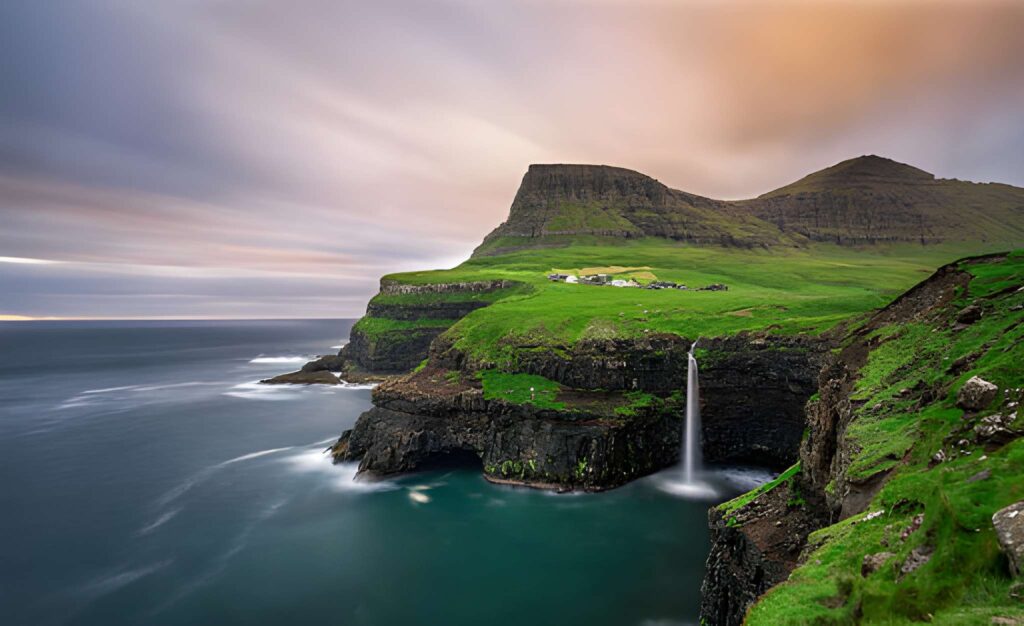
That’s the Faroe Islands in one sentence: an 18-island archipelago confident enough to occasionally tell visitors not to come, and interesting enough that people keep coming anyway.
If you landed here after typing some version of “why are the Faroe Islands closed to tourists,” “is it expensive,” or “do they even speak English there” into a search bar, you’re in the right place. This is the honest rundown of what you’re actually wondering about plus a few things you didn’t know to ask yet.
Yes, They Actually Close the Country Sometimes
Let’s start with the thing that probably brought you here. Since 2019, Visit Faroe Islands has run something called “Closed for Maintenance”: a weekend each spring where a handful of the most-visited sites shut their gates to ordinary tourists and open instead to volunteers anyone willing to fly in, grab a shovel, and spend a couple of days rebuilding footpaths, repairing cairns, and putting up trail signage. The first year drew roughly a hundred volunteers from dozens of countries. It was popular enough that they’ve done it every year since.
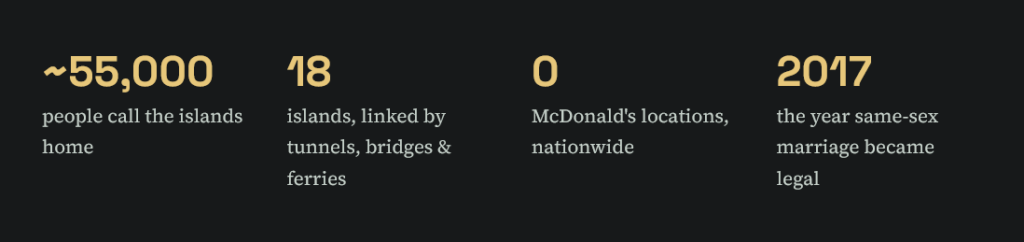
The logic isn’t complicated once you see the numbers. Around 55,000 people live here, on land that’s genuinely fragile thin soil over rock, constantly wet, easily eroded by foot traffic. Visitor numbers climbed fast over the last decade, and a small nation without Iceland’s decades of tourism infrastructure felt that growth in its trails before it felt it anywhere else. Closing a few sites for one weekend a year, on purpose, with volunteers doing the fixing, is a strange kind of hospitality but it is hospitality. It says: we want you here badly enough to protect the reason you came.
That’s not the only thing people mean when they call the Faroe Islands “controversial,” though, and it would be dishonest to skip the heavier one. The islands still practice the grindadráp a centuries-old pilot whale and dolphin hunt that remains legal and, depending on the year, kills anywhere from a few hundred to over a thousand animals. International conservation and animal-welfare groups have criticized it for decades, and the criticism has only intensified as footage circulates more widely. Many Faroese defend it just as strongly, as a regulated, community-run food tradition that predates industrial fishing and isn’t performed for tourists or profit. It’s a real, unresolved disagreement, not a minor cultural footnote and one you’re extremely unlikely to encounter directly as a visitor, since hunts happen at short notice in specific bays, not on any sightseeing itinerary.
The lighter version of “different” is much easier to love. There is, genuinely, not one McDonald’s anywhere in the Faroe Islands one of only a few places left in Europe that can say that. (There’s a Burger King in Tórshavn, if the craving hits.) Wander through any village and you’ll notice most houses are either brightly painted or a deep, distinctive black, with thick grass growing on the roof. Neither is decorative flair: the black comes from a centuries-old habit of coating wood in tar to keep the North Atlantic weather out, and the grass roofs do the same insulating job their ancestors relied on before anyone had central heating. It’s practical architecture that happens to look like something out of a fairy tale.
Even the people carry a small surprise. Genetic studies of the population have found a striking split: the male line traces overwhelmingly back to Scandinavia around 87% Norse while the female line is mostly Celtic, closer to 84%, likely Scottish and Irish. The tidy explanation historians settled on is that Viking men, largely, took or married Gaelic women on the way over. A thousand-plus years later, it still shows up in the DNA.
One more thing worth knowing before you go: the Faroe Islands legalized same-sex marriage in 2017 the last territory in the Nordic region to do so, and only after a genuinely close political vote. It’s not a simple story of automatic Scandinavian progressiveness; it took real debate, a narrow parliamentary margin, and years of advocacy from a small local LGBT+ community to get there. Adoption rights followed the same year, and the law now sits roughly in line with Denmark’s. Like a lot of things here, it’s a small, tight-knit society that got somewhere meaningful on its own timeline, not anyone else’s.
Can You Actually Talk to Anyone There?
Short answer: yes, easily. English has been taught from primary school for decades, and fluency is genuinely widespread menus, signage, and tourist information all lean English-friendly, and you’d have to go looking for a situation where nobody could help you. Faroese people also tend to apologize for their English, which is almost always unnecessary.
Faroese itself is the real point of pride, and it’s worth knowing why. It’s a North Germanic language descended from Old Norse essentially what the Vikings spoke, still alive, still the first language of the vast majority of the roughly 55,000 people who live here. Globally, it’s spoken by something like 70,000 to 100,000 people total, once you count the diaspora in Denmark and Iceland. For a language that small, still surviving as the dominant tongue of an entire nation is genuinely unusual, and locals know it.
You don’t need to learn any of it, but one word goes a long way: “Hallo” works for hello, and casually, people just say “Hey” which, delightfully, is exactly what it sounds like to an English speaker.
Then there’s the drink question, which comes up more than you’d expect. Alcohol here is sold almost entirely through a state monopoly called Rúsdrekkasøla Landsins (locals call it “Rúsan”), which runs about six or seven stores nationwide you won’t find beer or wine on a supermarket shelf. That system isn’t incidental, either: the islands banned alcohol above 2% outright in 1908 and didn’t lift the ban until 1992. The legal drinking age is 18, restaurants and bars need a separate license to serve, and if you want to try something local, look for Føroya Bjór or Okkara the two homegrown breweries (both owned by the same company, though that shouldn’t stop you from having an opinion about which is better). Expect to pay around 45 DKK, roughly $6 to $7, for a pint.
The Budget
Okay, But Will It Wreck Your Budget?
Yes, more or less let’s not dance around it. The currency is the Danish krone, and prices reflect a small, remote place where nearly everything, from lumber to lettuce, arrives by boat or plane. A mid-range restaurant main will run you roughly 150 to 250 DKK ($22–37), and a realistic day-to-day budget for a mid-range trip lands somewhere between €120 and €180 climbing well past that if you’re not careful with car rental and lodging.
Which brings up the comparison everyone eventually makes: is it worse than Iceland? The honest answer is that it depends what you’re measuring. Broad cost-of-living indices actually put Iceland slightly higher overall rent and groceries both tend to cost more there. But the lived experience of a short trip often flips that, because Iceland built out a genuinely competitive budget-tourism industry over the last fifteen years more car rental companies, more hostels, more package deals while the Faroe Islands, being both smaller and later to mass tourism, simply hasn’t. Fewer options tend to mean higher prices, even when the underlying cost of living is comparable. More than one traveler has arrived expecting “cheaper Iceland” and left having spent noticeably more per day.
None of that makes it not worth it. It just means you should budget like Iceland’s pricier cousin, not its bargain alternative.
The Bigger Question
So, Could You Actually Live Here?
This is genuinely one of the most common questions people ask about the Faroe Islands, and it deserves an honest answer rather than a dodge: visiting and living here are almost entirely separate systems, and it’s easy to conflate them because visa-free tourist entry makes the country feel more open than it actually is for relocation.
Here’s the practical version. If you’re American or from almost anywhere outside the Nordic countries showing up as a tourist requires nothing more than a passport. Staying to work or live is a different application entirely: a Work and Residence Permit, handled through the Danish Immigration Service in coordination with Faroese authorities. Notably, this applies to EU citizens too, since the Faroe Islands sit outside the EU despite being part of the Kingdom of Denmark; the free-movement rules that apply on the Danish mainland simply don’t reach here. Only citizens of the five Nordic countries can move, work, and settle freely, no permit required.
Real relocation math average salaries, house prices, what daily life actually costs once you’re not a tourist anymore is a big enough topic to deserve its own deep dive rather than a rushed paragraph here. For now: if the idea seriously appeals to you, treat “visa-free visit” and “right to move here” as two completely different questions, because immigration officials certainly do.
Before You Book
- Check Visit Faroe Islands’ site for maintenance-weekend closures before locking in your dates.
- Bring a passport valid well beyond your trip — “visa-free” doesn’t mean rule-free.
- Budget more than you think, especially for the rental car.
- Learn exactly one word of Faroese. You already know it: “Hey.”
- Buy alcohol at a Rúsan store — supermarkets won’t have it.
- Don’t plan your trip around seeing, or avoiding, a whale hunt either way. As a tourist, you almost certainly won’t encounter one.
The Takeaway
Worth It, Quirks Included
So: a country that occasionally locks its own front door, has no Big Mac within its borders, runs on a language older than most nations’ recorded history, and will cost you more than you budgeted for. None of that is a flaw in the pitch. It might be the actual pitch — a place still confident enough to do things its own way, on its own timeline, rather than smoothing itself out for whoever happens to be visiting that week.
That’s worth more than a cheaper flight or a familiar drive-through, honestly.